I still remember the first time I thought something was “off.” I had always been a good sleeper, but suddenly I was wide awake at three in the morning, heart racing, body flushed, with no chance of drifting back to sleep. At first, I blamed stress, too much coffee, maybe even the full moon. But when the night sweats came, followed by cycles that went completely rogue, I realized I was likely stepping into perimenopause — the transition that eventually leads to menopause.
Like so many women, I hadn’t been prepared for it. I thought menopause was just something that happened later in life when your period stopped. No one had told me that perimenopause could stretch across years, bring a whole mix of symptoms, and that getting the right menopause support would make such a difference.
What surprised me most was how little I knew about this stage of life. I had heard the word menopause, of course, but I thought it was something that happened in your fifties when your period simply stopped. No one had told me that there’s a whole transition that can stretch over years — and that it could touch almost every part of your life, from your mood to your memory to how you feel in your own skin.
If you’re here, chances are you’re noticing changes too, and maybe you’re wondering: Is this perimenopause? Am I in menopause already? And how do I find support that actually helps?
This guide is for you. It’s here to demystify what’s happening in your body, share both medical and holistic support options, and remind you that you don’t have to figure it all out alone.
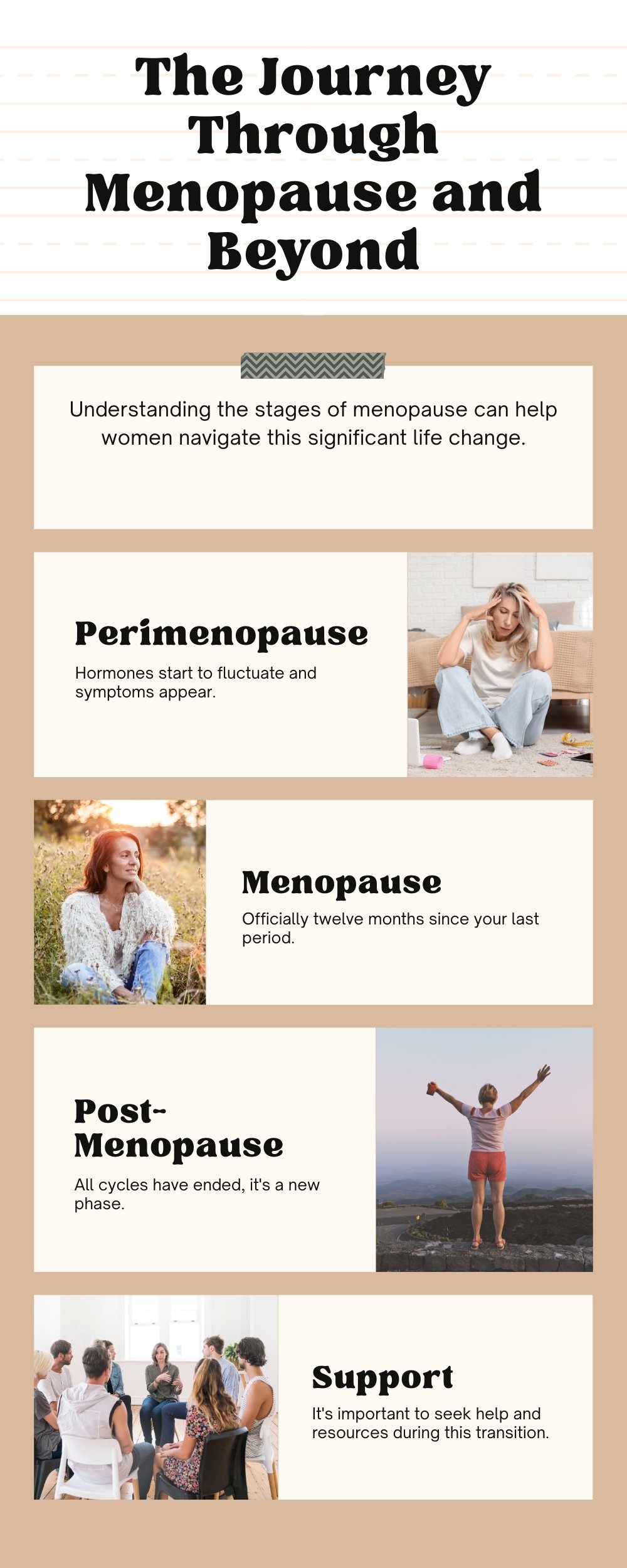
What Is Perimenopause?
Perimenopause is the transition leading up to menopause – and in many ways, it’s the part that can feel the most confusing. For some women, it starts subtly in their late thirties or early forties. For others, it doesn’t begin until later.
It happens because your hormones, especially estrogen and progesterone, start to fluctuate. And those ups and downs can ripple through your whole system.
For me, it began with unpredictable cycles – one month heavy, the next month barely there. Then came the restless nights, the waves of anxiety that didn’t make sense, and the feeling that my body wasn’t following its usual rules anymore.
Common perimenopause symptoms include:
- Irregular or heavier periods
- Hot flashes and night sweats
- Sleep disturbances or full-on insomnia
- Mood swings, anxiety, or unexpected irritability
- Brain fog and memory lapses that make you wonder if you’re “losing it”
- Vaginal dryness or discomfort
- Changes in weight or body composition
- Fatigue and low energy
Perimenopause can last for years – anywhere from four to ten is normal – before you officially reach menopause, which is defined as twelve consecutive months without a period.
Knowing this helped me so much. I went from feeling like my body was betraying me to realizing it was actually following a natural (if bumpy) process. And once you know what’s happening, you can start finding the right support.
What Is Menopause?
Medically speaking, menopause is defined as the one day that marks twelve months since your last period. After that, you’re considered post-menopausal.
But here’s the thing: that definition doesn’t really reflect how it feels in real life. After nine months without a period, I already feel like I’m in menopause. It’s not something I think about every day anymore. So when I hear that technically it only “counts” once you hit that twelve-month mark, it feels a bit strange — almost like a technicality that doesn’t match the lived reality.
And that’s part of the confusion. In everyday language, we use “menopause” to describe the whole transition — the hot flashes, the sleepless nights, the mood changes, the shift in cycles. But doctors split it into three phases:
Perimenopause: The lead-up, when your hormones fluctuate and symptoms begin. This can last several years.
Menopause: The official milestone — twelve months since your last period.
Post-menopause: Everything that comes after, when your cycles have ended completely.
I actually find it helpful to know both versions: the medical definition matters when you’re talking with doctors or looking at treatment options, but your lived definition is just as valid. If you feel like you’re in menopause because your period hasn’t shown up in months and your body feels different, that’s real.
Life After Menopause
Once you cross that twelve-month line, your hormone levels usually settle into a new baseline. For some women, that brings welcome relief — hot flashes ease up, sleep improves, and cycles are no longer something to think about. For others, certain symptoms continue, or new ones show up.
Common post-menopausal changes can include:
Bone health: Estrogen helps protect your bones, so keeping an eye on bone density matters.
Vaginal and urinary health: Lower estrogen levels can lead to dryness, discomfort, or UTIs, but local treatments often help.
Heart health: Estrogen also plays a role in cardiovascular protection, so lifestyle choices and checkups become even more important.
I don’t share this to be scary — just to say that menopause isn’t the “end of the story.” It’s the start of a new chapter, one where self-care, lifestyle, and support matter just as much as they did in perimenopause.
And here’s the truth: however you feel about it — relieved, sad, neutral, or somewhere in between — it’s all valid.
Menopause Myths and Facts
One of the reasons menopause can feel so confusing is that so many of us grew up surrounded by myths or half-truths. I know I did. For a long time, I thought menopause was simply the day your period stopped and maybe a few hot flashes sprinkled around it. But when I entered perimenopause myself, I realized there was so much more to the story.
A big myth is that menopause is only about hot flashes. While those are real for many women, the transition touches almost every part of your body — your sleep, your mood, your memory, your bones, even your heart health. Reducing it to hot flashes alone leaves so many of us unprepared for the wider impact.
Another common misconception is that menopause happens overnight, like a switch flipping. The reality is far slower and less tidy. Perimenopause can last years, sometimes close to a decade, before you reach that twelve-month milestone without a period. Knowing that this gradual transition is normal can ease a lot of worry when your body feels unpredictable.
It’s also easy to believe that once your period stops, all the symptoms magically disappear. For some women, things do improve, but for others, certain changes — like vaginal dryness or difficulty sleeping — can continue well into post-menopause. That doesn’t mean something is wrong with you. It just means your body is adjusting to a new hormonal baseline.
And perhaps the most harmful myth of all is that women should simply grit their teeth and tough it out. I hear this so often, and it breaks my heart. The truth is, there are safe, effective treatments and lifestyle changes that can make a huge difference. Menopause is not something you have to silently endure.
For me, letting go of these old myths was incredibly freeing. It gave me permission to ask better questions, seek real support, and see this transition for what it truly is: not a personal failing or a loss of control, but a natural phase of life that deserves care and understanding.
Why Support Matters
For generations, menopause was whispered about, if it was mentioned at all. My mother never really talked to me about it, and I suspect her mother didn’t talk to her. For a long time, women were expected to just “get on with it.”
But support matters. Here’s why:
- Symptoms can impact your work, relationships, and confidence.
- There are safe and effective treatment options, but you need to know what they are.
- Community helps you feel less alone — and being able to say “me too” is powerful.
When I finally started talking openly with friends about what I was experiencing, the relief was enormous. It turned out I wasn’t the only one lying awake at night, wondering if I was losing my mind. That conversation alone was a kind of medicine.
Medical Support for Perimenopause and Menopause
One of the first things most of us do when symptoms start to affect daily life is talk to a doctor. That sounds straightforward, but in reality, it can be frustrating (read more about my journey to find the right Menopause doctor here). Not every healthcare provider has in-depth training in menopause, and I know many women who felt brushed off when they first asked for help. If that happens to you, please know it’s not your fault — it just means you may need to look for someone with more experience in women’s midlife health.
When I first started researching treatment options, I felt completely overwhelmed. I had grown up with the idea that hormone therapy was dangerous, something to be avoided at all costs. The headlines I remembered from years ago were scary. But as I dug deeper, I discovered that the research has shifted a lot since then. For many women, hormone replacement therapy (often called HRT or MHT) is not only safe, but one of the most effective ways to ease symptoms like hot flashes, night sweats, and sleep problems, while also protecting bone and heart health. Of course, it’s not right for everyone, and it’s a very personal decision that depends on your medical history. That’s why having a provider who takes the time to walk you through your options is so important.
There are also non-hormonal treatments available. Some antidepressants and blood pressure medications, for example, can ease hot flashes and improve mood. Vaginal estrogen, which is a very low-dose local treatment, can be incredibly effective for dryness and discomfort and is considered safe for most women.
The point is: there are options. You don’t have to white-knuckle your way through years of disrupted sleep, anxiety, or pain during intimacy. Support is out there, but sometimes you have to be your own advocate to get it. That might mean asking more questions, requesting a referral, or even finding a menopause specialist through a professional directory.
For me, understanding that I had choices was empowering. It changed the way I thought about this whole stage of life — from something I had to “endure” to something I could actually support myself through.
Alternative and Complementary Support
Menopause isn’t only about hormones and physical changes. For many of us, it stirs up emotions we didn’t expect. I’ve had moments of sadness, wondering where the years went, and moments of relief, feeling glad to be free of certain struggles. There’s also been a sense of curiosity about what comes next — who I am becoming in this new stage of life.
What made the biggest difference for me was realizing I didn’t have to carry all of this alone. The first time I had an open conversation with a friend about my symptoms, I felt such a wave of relief. She was going through many of the same things, and just being able to say, “Oh, you too?” made me feel less isolated. There’s something deeply healing about hearing your own story reflected back to you in someone else’s words.
Community support can look different for everyone. For some, it’s a circle of friends who are in the same stage of life. For others, it’s joining an online group, listening to podcasts that share honest stories, or finding a membership or workshop that offers education and connection. Therapy or coaching can also be powerful, especially if anxiety, mood swings, or identity shifts feel overwhelming.
For me, podcasts and books were a lifeline in the beginning, when I didn’t know who to talk to. Later, conversations with friends and being part of communities where midlife was spoken about openly made me feel anchored. Suddenly, menopause wasn’t something I had to “figure out” in silence — it was a shared human experience.
What I’ve learned is this: support isn’t only about treatments or lifestyle changes. It’s also about being seen, heard, and understood. Sometimes the most important medicine is simply knowing you’re not alone.
FAQs About Perimenopause and Menopause
What age does perimenopause start?
It often begins in your 40s, but it can start earlier or later.
How do I know if it’s perimenopause or just stress?
Stress and perimenopause can overlap. But if you’re noticing changes in your cycle alongside other symptoms, it may be perimenopause.
Can perimenopause cause anxiety?
Yes. Hormonal fluctuations can trigger mood changes, anxiety, or even panic attacks. You’re not imagining it.
Is HRT safe?
For most women, yes. But it depends on your health history. A menopause-trained doctor can guide you.
Will I ever feel like myself again?
Yes — though “yourself” may feel different. With the right support, symptoms ease, and many women feel more grounded and free than before.
Embracing the Midlife Transition
Perimenopause and menopause aren’t always easy, but they’re a natural part of life. What has helped me most is knowing that I’m not alone, that what I’m experiencing is normal, and that there are many ways to support myself along the way.
If you’re in the middle of this transition, I hope this guide has given you some clarity and ideas for what might help. You don’t have to do everything at once. Start with one small change, or reach out for one kind of support, and build from there.
This stage isn’t just about endings — it’s also about finding new rhythms, new strengths, and a different kind of freedom. However you move through it, know that it’s okay to take it at your own pace.

Susanne Rieker is the founder of Midlife etc. Based in the beautiful Mediterranean island of Majorca, Spain, she’s also a business coach helping heart-led entrepreneurs build impactful online businesses. Follow her on Instagram @susannerieker.